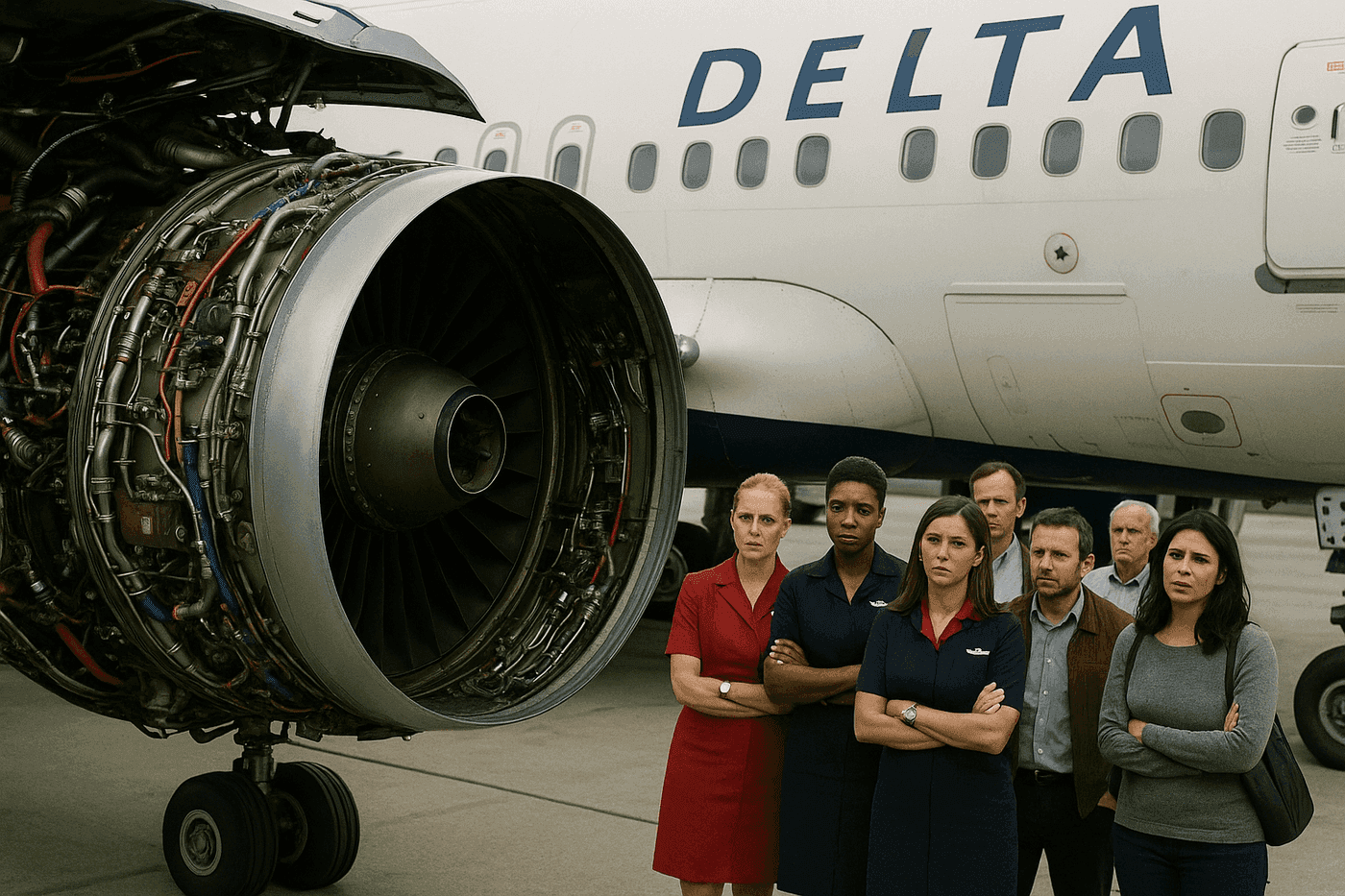
Delta Air Lines has been secretly replacing auxiliary power units on more than 300 Airbus A320 family aircraft since 2022 after discovering that faulty engines were leaking toxic fumes into cabin air supplies, causing neurological damage, brain injuries, and severe health problems for flight attendants and passengers in an industry-wide crisis airlines have concealed for decades.
The airline confirmed to CBS News in September 2025 that the massive engine replacement initiative, now over ninety percent complete, addresses a frightening design flaw where oil leaks from auxiliary power units contaminate the ventilation systems that supply breathable air to aircraft cabins. Flight attendants reported experiencing symptoms including dizziness, respiratory distress, memory loss, chronic fatigue, and in one documented case, traumatic brain injury after inhaling toxic fumes on flights.
"I felt like I might die, and I thought, you know, I wonder what my mom is going to think—I went to work, and you know, I may not make it. Toxic fumes trigger neurological disorders, including memory loss and chronic fatigue that persist for years."
A Wall Street Journal investigation revealed that toxic air events have surged across American carriers in recent years, particularly on Airbus A320-family jets, with the problem persisting for approximately two decades while airlines downplayed risks and avoided costly fleet-wide fixes. Auxiliary power units provide electricity and cabin air when main engines aren't running, and when these systems fail, oil vapors seep into the plane's airflow system, allowing harmful fumes to spread throughout passenger compartments even when units aren't actively operating.
Airbus has acknowledged the APU design as a leading factor in these toxic fume incidents, announcing that future aircraft will relocate air intake systems to the top of the fuselage rather than the underside where oil leaks more easily contaminate incoming air. However, this design change only applies to new jets built starting in 2026, leaving airlines responsible for managing risks in current fleets that will remain in service for decades while passengers remain largely unaware of the health dangers they face.
Dr. Robert Harrison, an occupational medicine specialist at University of California San Francisco, treats more than 100 crew members annually for fume-related illnesses. Symptoms mimic acute poisoning with long-term effects like neuropathy persisting for years. The fumes have been linked to diverted flights, emergency landings, and hospitalizations.
United Airlines CEO Scott Kirby revealed he has been personally focused on the toxic fume issue for over a decade, implementing proactive maintenance programs that track engine oil consumption and pressure while replacing APU seals preventively. JetBlue acknowledged that air quality concerns exist industry-wide but insisted that different odors arising during aircraft operations are "normal," a statement that critics characterized as dangerously dismissive of legitimate health threats to passengers and crews.
The scandal exposes systemic failures in aviation safety oversight as airlines and regulators allowed known health hazards to persist for twenty years while prioritizing cost savings over passenger protection. Delta's initiative to replace faulty engines fleet-wide represents the most aggressive action taken by any carrier, though questions remain about why such measures weren't mandated industry-wide years ago. As travelers remain largely unaware they're breathing potentially contaminated air during flights, the toxic fume crisis underscores disturbing gaps between aviation industry safety rhetoric and the reality of unaddressed mechanical defects that continue poisoning crews and passengers on thousands of flights annually.